What is CMPUT250? Part 1
< Previous Next >Here at the Games Den, we occasionally mention the Game Development Certificate. Considering you’re reading this newsletter, you’re probably interested in learning more about game development. Yet, it’s hard to know where to start. This series is here to answer your questions as I take my journey through the class where it all starts, CMPUT250.
Why take CMPUT250?
The class allows you to make a fully fledged video game from start to end. You will learn the whole process alongside a group of like-minded peers all interested in game design. I’ve never seen a more passionate group of students in Computing Science. Not only is CMPUT250 a great experience, but it’s also the first class in the UofA’s Certificate in Computer Game Development. If you see yourself having a future in the games industry, or just want something more on your diploma at graduation, the game dev certificate is something to look into. Both CMPUT250 and the certificate are open to every faculty, not just science students. You can learn more about pursuing the certificate here or joining the class here.
How will you make a game?
In the first couple of weeks, everyone will form teams of six people. Each team is assigned an Executive Producer, or EP for short. Every EP has previously taken CMPUT250; they have plenty of experience making games. Your EP will guide you through the whole process, attending every group meeting to help you avoid common mistakes. Lectures and labs will bring your group through every step of the development process in the Unity game engine. Together, you will form your game through your pitch, prototyping, production, marketing, and finally release.
What are the goals of CMPUT250?
In the course, your work is always done in teams with students from different majors and faculties. The class is teaching you to develop games in cooperation with other people from diverse backgrounds, just like in a real studio. The course also uses real-world tools like Unity and GitHub. While some people distane Unity, myself included, it was picked for a good reason. Unity is by far the most common engine used in the industry. The lecture content attempts to cover every aspect of game development. Since game dev is such a big field, this means everything is just an introduction. Other courses will cover things in more detail later in the Game Development Certificate. CMPUT 250 is “a mile wide and an inch deep,” as my professor, Nathan Sturtevant, might say.
How does team formation work?
In theory, you can start forming groups with friends or people you meet in the CMPUT250 class Discord immediately. Realistically, finding five other members you really connect with like that is hard. That’s why CMPUT250 has a pizza social every year. While it’s technically optional, most of the class always attends, and I highly recommend going. Even if you’re introverted, which I am myself, there will be people worth meeting! I left with a full team, excited to start making our game! After groups have been chosen, you will all write up a team formation agreement. This is to establish expectations in the hope you’ll all contribute more or less evenly in this very groupwork-focused course.
What is a game pitch?
If you were stuck in an elevator with a Bioware executive for five minutes, how would you convince them to make your game? This is the purpose of a pitch: to quickly explain why your game should exist before a line of code has been written. Once you have a game idea, your group will create a slideshow. You talk about the setting, plot, charaters and mechanics. In CMPUT250, every group presents their pitches to each other. For example, our pitch talked about how our main character travels through time to find their lost dog in a forest. All the while, they talk to their friends and family through social media. In this fully voice-acted dialog, they discover that they are loved more than they ever thought.
How do you make a game idea?
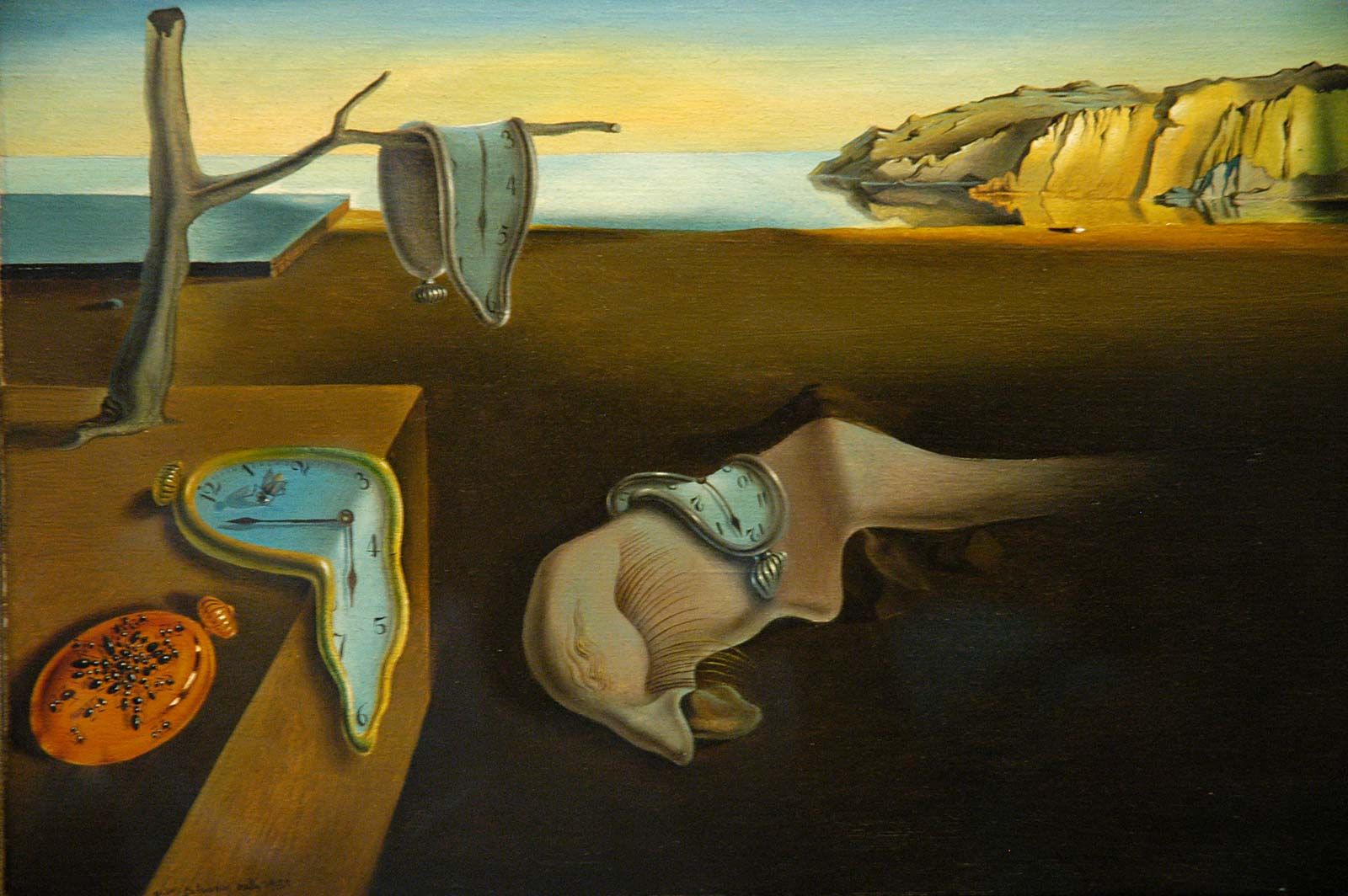
Since many people don’t show up to class with an idea and a slide deck, CMPUT250 also teaches you how to make a game idea. The process of making unique game ideas is called ideation. This isn’t always easy. You want to create something compelling, but not too similar to games that already exist. You want to lay out a vision your team will follow, but also something small enough to complete and polish. As an exercise in lecture, each group took a piece of media unrelated to game development. We then asked, “How would we create a game like this?” For example, we took Salvador Dali’s painting The Persistence of Memory, image below. We then talked about this painting as a game. We thought the game would have time travel that would make the player question what is real. Eventually, this turned into A Hike Through Time, the game my team is developing right now.
In the next part, we will talk about playtesting and prototypes. If you have any more questions, send me a message on Discord at averagestardust.